

 By Admin
 November 18, 2026
Designing an electroplating plant may appear quite simple with just a series of chemical tanks, however there are several things to consider. This includes tank size, materials, the type of components and the correct flow of materials. It will also determine your electroplating plant design.
When working with an electroplating plant manufacturer, you can ensure your equipment is designed the right way for your process.
At Plast World, we produce thermoplastic process equipment for metal finishing processes such as electroplating, anodizing, pickling and galvanizing. As electroplating plant manufacturers in India, we have a focus on tank systems and equipment.
An electroplating plant is a factory used to deposit a thin layer of metal onto a surface via an electrochemical process. This can improve the corrosion resistance, hardness, wear, electrical properties and appearance of the surface.
An electroplating plant will generally consist of:
Electroplating can be used in a variety of areas:
The process will depend on the base material, type of coating metal and component design.
Electroplating involves an electrochemical process where ions from an electrolyte solution are deposited onto a conductive material. The component will generally act as the cathode and the anode will be the right type to complete the circuit.
When direct current is applied to the plating bath, reduction occurs and metal ions will be deposited onto the surface of the work piece. Conditions must be controlled throughout the process.
A typical electroplating system may include:
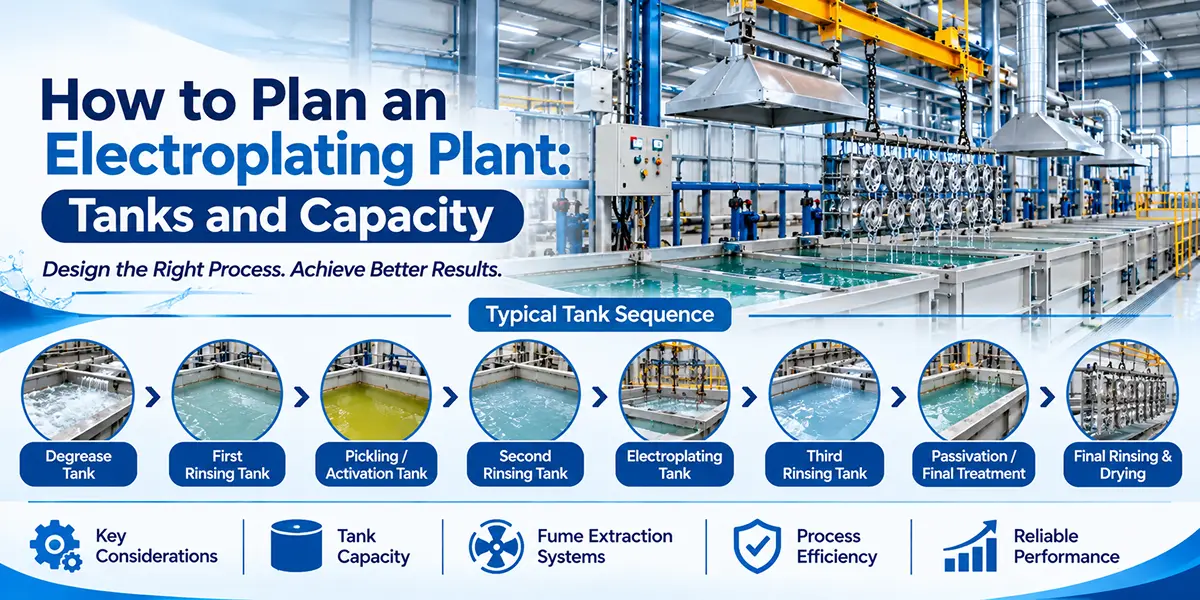
One of the main considerations when designing an electroplating plant is the tank sequence. This’ll ensure your components are prepared for the next step in the process.
A typical sequence would include:
Not all electroplating plants will have the same sequence. The amount of tanks and what they consist of will depend on the plating metal, base material, chemical, process & quality requirements.
At Plast World, we can produce thermoplastic process tanks for degrease, spray, pickling, passivation, plating and other processes. This means your equipment can be designed to suit the full process.
Before finalising tank sizes, it is important to consider the capacity of the plant. This will affect production, cycle times and tank sizes.
Consider:
Tank capacity should be calculated based off the inside size of the tank. This should take into account the working liquid level, immersion depth and displacement from components.
Fume extraction systems can be an important consideration. Depending on what chemicals are used, electroplating can cause fumes, mist and steam.
Consider:
At Plast World, one of the most trusted electroplating plant manufacturers in India; we can produce acid fume extraction and zinc white fume extraction systems. This should be chosen based on the process and environmental and safety requirements.
To choose the right equipment for your electroplating facility you‘ll need to consider the full process. Below are some considerations.
By discussing with the equipment manufacturer, you can ensure the correct tank sizes, materials and equipment are chosen. Provide them with the component sizes, production goals, process sequence, chemical details and space available.
At Plast World, we specialise in producing thermoplastic process equipment for metal finishing and industrial surface treatment. We were formed in 2004 and are based in Vatva, Ahmedabad, Gujarat. We produce tanks and equipment for electroplating, anodizing, pickling and galvanizing.
We have a wide range of products including pickling tanks, pretreatment tanks, acid storage tanks, electroplating tanks and fume extraction systems. We can also provide bespoke thermoplastic equipment for degrease, rinsing, passivation, cleaning and other processes.
Our manufacturing unit is around 75,000 sq.ft. We provide design, manufacturing and quality testing. We perform testing on tensile, flexural, impact and compressive strengths. (Please refer to website).
We also offer a variety of options for our tanks. This includes heating, circulation and fume extraction systems. We will understand your process, chemical, component sizes and production requirements to determine the correct equipment.
When designing an electroplating plant, you should consider tank sequence, materials, capacity, rinsing and fume extraction systems. Everything should work together to ensure consistent surface treatment.
At Plast World, we produce thermoplastic process tanks and equipment for metal finishing. As electroplating plant manufacturers, we design our equipment to suit specific processes. If you are looking for electroplating plant manufacturers in India please get in touch. We can help you with tank sizes, materials, capacity and correct equipment for your project.
Depending on the process, you might need degrease, rinsing, pickling/activation, electroplating, passivation and final rinsing tanks.
It’ll depend on the chemicals, concentration and temperature. Industrial thermoplastic materials such as polypropylene may be suitable for certain chemicals.
Calculate based on the internal tank size and working liquid level. This will depend on the component size, batch size, immersion depth and production goals.
Some plating and chemical processes can cause fumes. Having a correct extraction and scrubbing system will help control exposure in the workplace.
Yes! Tank size, material, design and equipment can be designed to suit your chemicals, component sizes, production requirements and space.

Plast World
Plot NO. 07, Dev Estate,
Nr. National Rifle, Opp. Power House,
Ramol Cross Road, Vatva,
Ahmedabad- 382 445
Gujarat (india)
Powered by : #1 Vinayak InfoSoft - SEO Company Ahmedabad All Copyrights © . Plast World
