

 By Admin
 November 04, 2026
An anodising plant is an electrochemical process used to improve the corrosion resistance, durability and appearance of aluminium components. Efficient anodising requires consideration of tanks, chemicals, rinsing, electricity and fumes.
By choosing an experienced anodising plant manufacturer in India you can ensure your anodising plant will have the correct equipment to suit your production and components.
Plast World; a trusted anodising plant supplier; manufactures thermoplastic process tanks and ancillary equipment for a range of metal finishing processes including anodising, electroplating, pickling and galvanising.
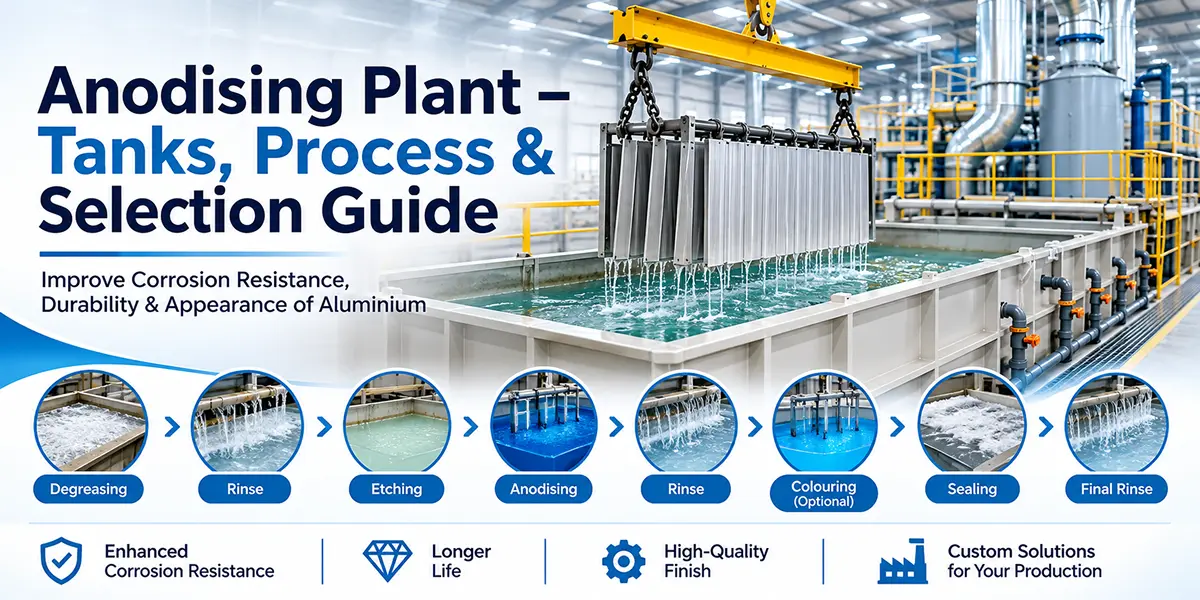
An anodising plant is an industrial process used to produce a controlled oxide layer on metal components, typically aluminium. This is completed via an electrochemical process where the metal is converted to form an oxide layer.
This can increase corrosion resistance, hardness and wear resistance of the component. Depending on the process colouration can also be achieved.
Anodising plants are commonly used in:
Anodising works by using an electrochemical process. The aluminium component is placed in an electrolyte solution and acts as the anode. Direct current is passed through the solution to create an oxide layer.
Anodising typically includes:
Typically an anodising process will be completed in a series of steps. The tanks used will depend on the anodising type and desired surface finish.
A typical anodising process includes:
Not all plants will require all these processes. Your process should be finalised based on the anodising method and product requirements.
Fumes
Certain chemical processes will create fumes, steam or mist. You should consider the concentration of chemicals, size of tanks, position of extraction hoods, piping, air flow and exhaust system. Plast World manufacture acid and zinc white fume extraction systems. The correct extraction should be chosen depending on what chemicals would be used in the anodising plant.
Rinse
Rinse tanks are used to remove any chemical residue from the previous process. Depending on your production requirements you could have single, multi or counter current rinse tanks. Consider water usage, drainage, waste water and positioning.
Consider the components you want to anodise, production volumes, chemicals and space.
When choosing an anodising plant manufacturer in India consider if they can offer bespoke tank sizes, materials and ancillary equipment for your process. Choosing an experienced anodising plant supplier can help you determine the correct size, production volumes and chemicals for your system.
Plast World specialise in thermoplastic process equipment for industrial surface treatments. Since 2004 we have been manufacturing tanks and ancillary equipment for industries including anodising, electroplating, pickling and galvanising from our site in Vatva, Ahmedabad, Gujarat.
We have a range of PP process tanks, pretreatment tanks, acid storage tanks and fume extraction systems. We can also supply bespoke thermoplastic equipment for cleaning, degreasing, rinsing, passivation, plating and more.
Our manufacturing facilities are around 75,000sqft and we have design, manufacturing and quality control. We carry out quality control tests including tensile, flexural, impact and compression strength tests.
We can supply tanks with heating and circulation depending on your project requirements. Our aim’s to understand your process conditions, chemicals, component size and production requirements to ensure we can supply you with the right equipment configuration.
An efficient anodising plant will depend on having the correct tanks, chemicals, electricity, rinse and fumes. By planning your anodising plant you can ensure you will have a consistent process, production volumes and correct surface finish.
Plast World manufacture thermoplastic process tanks and ancillaries for industrial metal finishing. As an anodising plant manufacturer in India we will develop bespoke tank solutions for your process and installation requirements. Contact us today if you’re looking for an anodising plant supplier.
Typical tanks used would be degreasing, rinsing, etching, desmutting, anodising, colouring and sealing. This will depend on the process.
Certain chemical processes can create fumes or mist. Using the correct extraction and treatment can help to reduce exposure in the working environment.
The capacity will depend on the internal size of the tank and the working level. The size of component/batch and immersion requirements will also affect the size of tank needed.
Yes. Tanks can be designed to suit your process, chemicals, component sizes, conditions and space.

Plast World
Plot NO. 07, Dev Estate,
Nr. National Rifle, Opp. Power House,
Ramol Cross Road, Vatva,
Ahmedabad- 382 445
Gujarat (india)
Powered by : #1 Vinayak InfoSoft - SEO Company Ahmedabad All Copyrights © . Plast World
