

 By Admin
 October 14, 2026
Metal castings can be found in many industries like machinery, vehicles, equipment, and in some other industries. In metal castings, there may be oxide layers, scale formation, or any other contaminants which affect further processing of the metal part. This must be removed prior to painting or coating of the metal.
Pickling helps in removing some oxides from metal surfaces through the application of chemicals. The method must suit with the type of metal, casting conditions, and the kind of finish needed. Choosing the right equipment is very essential for both foundry and surface treating industries. Working with the right casting pickling tank manufacturer will enable the industry to choose the right tanks for its processes.
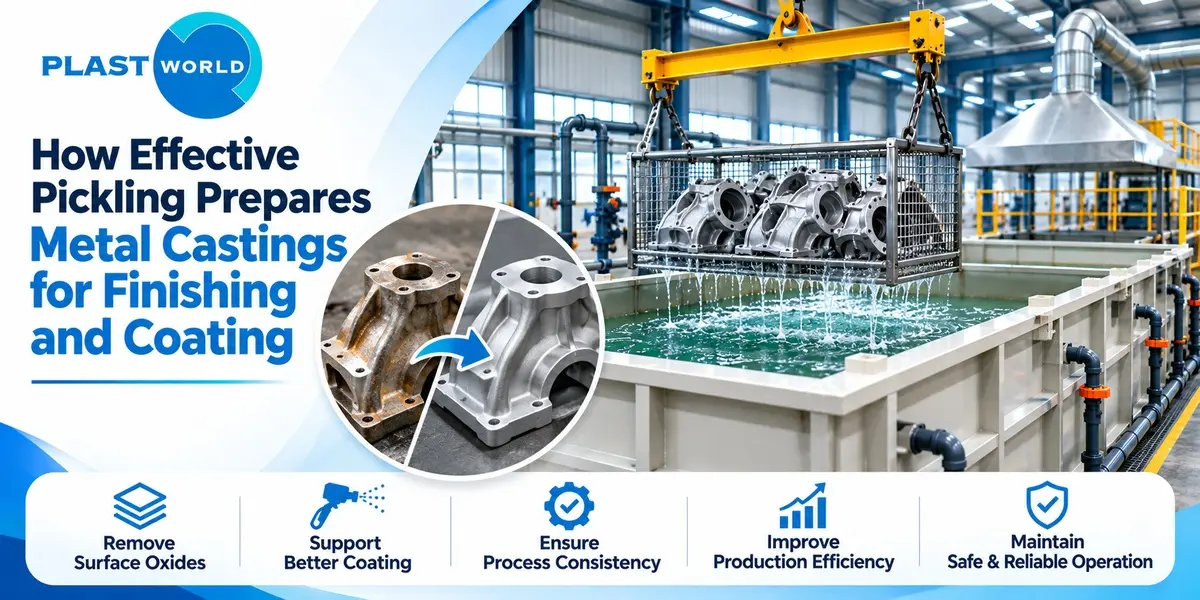
The casting process might result in the formation of an oxidized layer, residue, and texture inconsistencies. Further cleaning might be necessary before moving forward with either the finishing or coating process.
Improper cleaning process might cause inconsistencies with the finish and coating process and unnecessary rework. The cleaning process will be dependent upon the type of alloy used, its surface state and the applications.
Pickling should not be treated as a universal solution for every casting. Certain metals and alloys can be damaged by unsuitable chemicals or excessive exposure. Process trials and technical guidance are important when establishing the correct treatment conditions.
1. Removes Surface Oxides
Suitable pickling solutions can help remove oxide layers that form during casting, storage, or heating. A cleaner surface creates better conditions for subsequent finishing operations.
2. Helps Prepare Components for Coating
The painting process and coating requires correct surface preparation. The removal of oxides from the surface will lead to effective adherence of the coating, but the final performance will be dependent on the rinsing process, drying, surface profile, and coating systems used.
3. Increases Process Consistency
Under the controlled surface preparation, the process can be done consistently by the operator including accurate loading, immersing time, chemical use, and rinsing process.
4. Promotes Effective Manufacturing
When the cleaning process is carefully planned, the parts can move through the manufacturing process without disruption. Correct tank sizes and handling facilities will ensure that the operators are effective when handling the workload.
Tank selection should always begin with the castings themselves. Consider their size, weight, shape, and number of castings to be treated during one shift. It may require an entirely different configuration compared to smaller castings which are to be treated in baskets.
Compatibility is another important aspect which should be considered while selecting a suitable pickling tank. There are many polypropylene tanks being used in some chemical treatments due to their chemical resistance.
It is very important for a good casting pickling tank manufacturer to take into account the complete process instead of just recommending the right tank based on its size.
Chemical treatment involves proper handling. The operators need to follow the right methods of mixing, transferring, process monitoring, and spill management. Proper safety gear is critical.
Fumes may develop during some chemical treatment operations. The extraction system must be properly selected based on the chemical composition of the system and the process being carried out. Extraction ducts, fans, and scrubbers need to be checked periodically to make sure that the system works as expected.
It is equally critical since the chemical residue on the castings may hinder further processing. It is essential for the rinsing system and the water management to fit the chemistry and product.
Inspection becomes essential for identifying any problem before it can impact the manufacturing process. Tank building, welding, supports, draining connections, and surroundings must be analysed for any kind of damage or leak. Ensure that the surrounding remains clean and check for any strange variations in consumption or performance of chemicals.
It would be recommended for the employees to keep record of some important elements in relation to the process, such as condition of the solution used, treatment time, and surface problems appearing frequently.
At Plast World we offer a variety of industrial pickling tanks, pickling plants, galvanising and fume extraction systems for metal processing. This will depend on the composition of the casting, chemical process involved, production quantities and desired finish.
Before selecting a casting pickling tank manufacturer, companies should ensure that they know what their requirements are and ask for technical details about material compatibility, construction, and assistance. Planning ensures that there are no mistakes made and operations become much easier.
Effective pickling begins with understanding the casting material and selecting a suitable cleaning process. Appropriate tank design, controlled chemical treatment, proper rinsing, and regular maintenance all contribute to better preparation for finishing and coating.
Explore industrial treatment solutions at PicklingTank.com. Contact Plast World to discuss your casting dimensions, production needs, and chemical treatment requirements.
No. The process depends on the alloy and its compatibility with the selected chemicals.
No. It supports preparation, but rinsing, drying, and coating methods also affect the result.
Consider casting dimensions, material, chemical conditions, production volume, and handling needs.

Plast World
Plot NO. 07, Dev Estate,
Nr. National Rifle, Opp. Power House,
Ramol Cross Road, Vatva,
Ahmedabad- 382 445
Gujarat (india)
Powered by : #1 Vinayak InfoSoft - SEO Company Ahmedabad All Copyrights © . Plast World
