

 By Admin
 October 07, 2026
Steel wire has several uses in construction, fencing, fastening, manufacturing, and industries in general. It is imperative for the steel wire to be prepared before any form of galvanizing occurs. The presence of rust, mill scale, and other forms of debris will interfere with the process.
The wire pickling method assists in eliminating surface oxides via chemical treatment. However, getting accurate results is not only achieved by the cleaning agent but requires other factors as well. Some of these factors include the design of the tank, handling of the wires, process monitoring, rinsing, and even maintenance. Businesses looking to modernize their plants might benefit from contacting wire pickling tank manufacturers who can provide them tanks according to their wire size and production capacity.
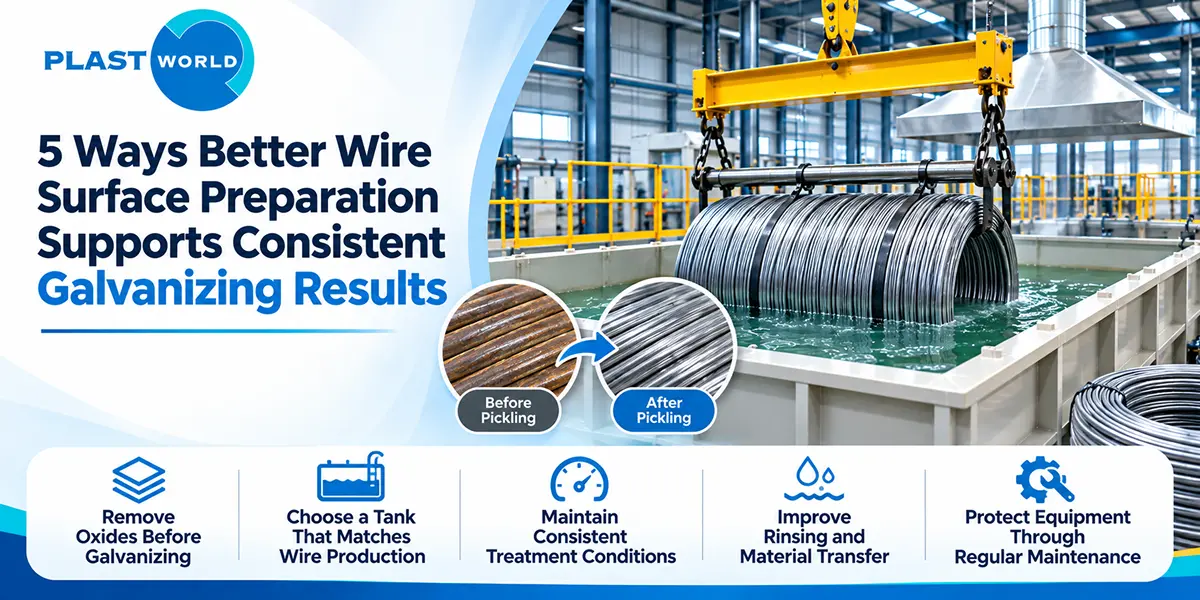
An oxide film may form on wires during the manufacturing process as well as when it is being stored and transported. This film will affect the preparations needed for galvanizing if not removed.
Pickling uses a suitable chemical solution to remove these oxides. The solution, concentration, and duration of the pickling process should be decided based on the nature of the wire and the state of the wire's surface.
Proper cleaning creates better conditions for the next processing stages. It should be followed by suitable rinsing and any additional treatment required by the galvanizing process.
Wire processing equipment should be designed to handle the size and amount of material processed. A smaller tank may hinder loading of the material, while an inappropriate design may make material handling impossible.
When buying the equipment, consider the size of wire coils, the weight of the batch, and the production capacity. Consider how coils will be loaded, moved, drained, and transferred to the next stage.
Pickling tanks made from polypropylene are applied in many different industrial uses for treating chemicals. It all depends on the chemical that is being used, the temperatures, the type of tank being used, and its structural needs. Good layout can assist in handling wires effectively.
The establishment of a proper procedure of operations ensures that all the shifts operate on the same procedure. Routine testing will also ensure that a solution is revised, changed, or evaluated.
Proper tank placement will provide a means of ensuring proper immersion and draining of wires. However, validation of the treatment process should also be done using the appropriate wire grades and condition. Process parameter documentation helps in analysis of repeated faults.
After pickling, the wires normally need proper rinsing for the removal of chemical traces. In case the chemicals get carried over to other stages, they might hinder further treatment or even pose some handling issues.
The rinsing system needs to be adequate for the size of wire and its processing speed. Operators should also evaluate the drainage and transfer processes so as to limit the amount of chemical carryover during the process.
It is also important to think of the entire line layout as the delay between different treatment stages will definitely impact the production process.
Treatment operations can be challenging in terms of the conditions under which they take place. The tank surfaces, joints, support points, drainage points, and associated pipe systems must be checked for damage or leaks.
The extraction system must be considered, too. If the acid gases are not properly managed, they could result in damage to the structure and other pieces of equipment in the area. Extraction and scrubbing systems will have to be put in place depending on the chemical properties present.
Unusual smells, leaks, poor functioning of the extractor, and cleaning issues should be reported. This is important for maintenance to identify any issues early to prevent disruptions in the production process.
Plast World supplies pickling tanks, galvanization facilities, and fume extraction facilities suitable for industrial purposes. The correct configuration will be dependent on the wire diameters, chemicals required, and production quantities.
When choosing the best wire pickling tank manufacturer, some considerations should include the quality of the tank, appropriateness of the process, maintenance of the tank, among others, to ensure optimum performance.
The consistent galvanization of wires begins with proper surface preparation. Oxide removal, proper tank selection, controlled treatment conditions, proper rinsing, and maintenance all play their part in ensuring a reliable process.
Visit PicklingTank.com to explore industrial pickling and galvanizing equipment. Contact the team to discuss wire treatment requirements and suitable tank configurations for your production line.
It removes surface oxides that may interfere with the preparation required for zinc coating.
Consider coil dimensions, batch volume, chemical compatibility, handling, and production requirements.
No. Rinsing, fluxing, bath conditions, and other process stages also influence coating quality.

Plast World
Plot NO. 07, Dev Estate,
Nr. National Rifle, Opp. Power House,
Ramol Cross Road, Vatva,
Ahmedabad- 382 445
Gujarat (india)
Powered by : #1 Vinayak InfoSoft - SEO Company Ahmedabad All Copyrights © . Plast World
