

 By Admin
  September 21, 2026
Rusting is one of the major forms of reaction between steel and its surroundings. The moisture, air, chemicals, and other corrosive elements present in the surroundings can slowly start corroding a bare steel surface, and this will affect the appearance, structural strength, and useful life of the metal. Although rusting is the effect seen on the steel surface, the actual problem is preventing corrosion of the steel prior to any recurrence. In this regard, hot dip galvanizing proves to be an effective option.
A properly planned galvanizing operation involves much more than a zinc bath. Surface preparation, pickling, rinsing, flux treatment, galvanizing, fume extraction, and supporting equipment all contribute to the overall process. For manufacturers planning or upgrading such facilities, working with an experienced hot dip galvanizing plant supplier can help bring these different requirements together into a coordinated plant setup.
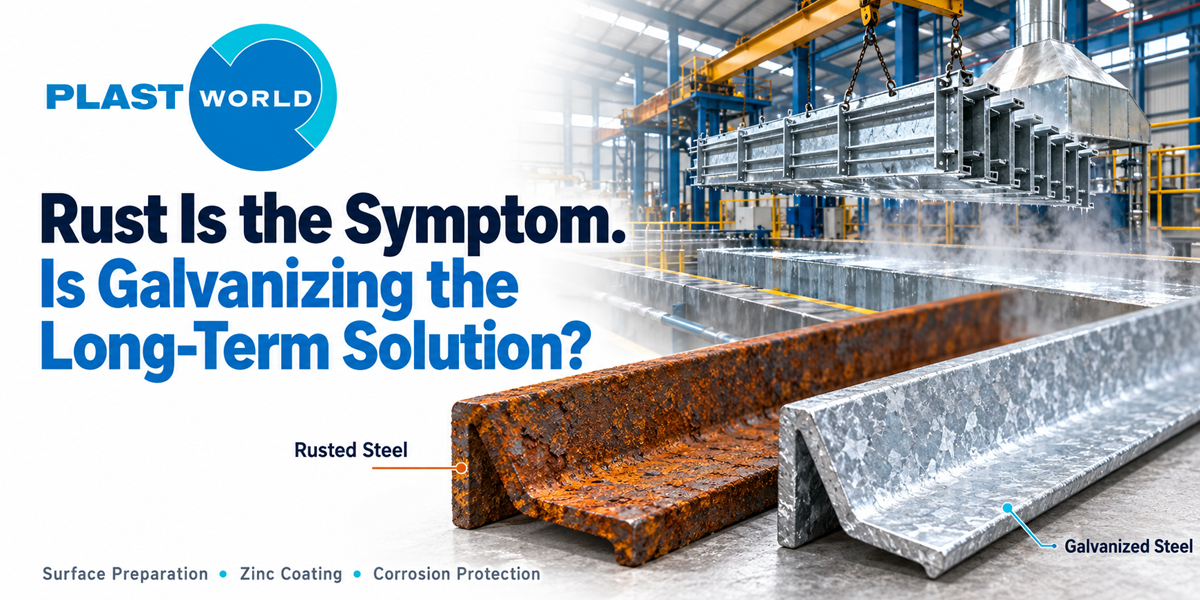
Steel is one of the most preferred materials because of its strength and abundance, but there is an impact on the steel surface when it comes into contact with moisture and air. Under difficult circumstances, chemicals, salts, moisture, and industrial pollutants might cause faster corrosion.
Painting and other surface treatments are protective but their efficiency greatly depends on surface preparation. Any scratch, defect or damage in the surface coating may be an opportunity for corrosion to take place.
Hot dip galvanizing approaches the problem differently. Instead of relying only on an external paint-like layer, it creates a metallurgically bonded zinc coating over the steel surface. This provides a protective barrier while zinc also offers sacrificial protection to exposed areas of steel.
One of the most critical processes before dipping process is the preparation phase. This is because steel can have rust, mill scale, grease, and oil among others which would affect the formation of zinc coating.
This is why pretreatment plays such an important role. The common preparation process includes degreasing, pickling, rinsing, and fluxing. In the process of pickling, an acid solution is used to clean off oxides, rust, and scale from the surface of the metal in preparation for galvanization.
Plast World manufactures pickling tanks and process equipment for galvanizing applications. Its pickling plants are designed for products such as transmission towers, poles, pipes, tubes, wire coils, gratings, cable trays, guards, railings, and other steel components.
Once the steel has been properly prepared, it is immersed in molten zinc. The zinc reacts with the iron in the steel to form zinc-iron alloy layers, with an outer zinc layer providing additional protection.
The formed coating thus forms a barrier between the steel and its environment. In case the surface gets scratched, the zinc also offers sacrificial protection as it is easier to consume than the base material.
This combination of barrier and sacrificial protection is one reason galvanized steel is used for applications where corrosion resistance and durability are important.
The performance of a galvanizing system is not only dependent upon the zinc bath. The equipment that supports the galvanizing system must be capable of resisting chemicals, temperature changes, handling, and difficult industrial conditions.
Pickling and pretreatment tanks, for example, come into direct contact with aggressive chemical solutions. Material compatibility and construction quality therefore become important considerations when developing a galvanizing plant.
Plast World specializes in thermoplastic process equipment for metal finishing industries and manufactures tanks for pickling, degreasing, rinsing, passivation, flux treatment, and other pre- and post-treatment stages. Its pickling tanks can also be custom-designed according to specific process requirements.
Corrosion protection should not be considered separately from process control. Galvanizing and its associated pretreatment stages can generate fumes that require appropriate extraction and treatment.
During hot dip galvanizing, zinc fumes can be generated when steel is immersed in the zinc kettle. Acid fumes may also be generated during the pickling stage. Without suitable extraction, these fumes can affect the working area and surrounding equipment.
Plast World's zinc white fume extraction systems use lateral suction ducting positioned around the zinc kettle. Extracted fumes are directed through a scrubbing unit, where the exhaust air is treated before being released through the chimney. The system is constructed from corrosion-resistant thermoplastic materials.
For pickling operations, Plast World also provides acid fume extraction systems designed for applications involving hydrochloric acid, sulphuric acid, hydrofluoric acid, nitric acid, and mixed acids.
Besides changing the appearance of the steel, the significance of hot-dip galvanization lies in its ability to offer protection against corrosion, which in turn would lead to a decrease in maintenance due to corrosion and increase in the lifespan of the product.
This makes galvanizing particularly relevant to products used in demanding applications such as transmission towers, high-mast poles, gratings, crash barriers, pipes, tubes, and other fabricated steel components. Plast World specifically works with equipment and process applications associated with these types of products.
For manufacturers, the bigger objective is therefore not simply to apply zinc, but to establish a controlled process that consistently prepares, treats, coats, and manages the steel.
Rust may be the visible warning sign, but long-term steel protection begins much earlier. Galvanizing process is effective when proper surface preparation, appropriate processing equipment, treatment process, and fumes are involved.
Hot dip galvanizing can provide steel with both barrier and sacrificial protection, helping it withstand demanding environments for longer periods. However, achieving consistent results requires a well-planned process and equipment designed around the application.
With experience in pickling plants, galvanizing tanks, galvanizing plants, and fume extraction systems, Plast World provides thermoplastic process equipment for metal finishing and hot dip galvanizing applications.
Pickling eliminates rust, oxide films, mill scale and other impurities on steel. Surface preparation is key to the uniformity of zinc coating in the process of galvanization.
Depending on the design of the plant, equipment might include pickling and pretreatment tanks, rinsing and fluxing units, galvanizing equipment, fume exhaust units, scrubbers, and other process equipment.
Fumes which are acidic in nature and contain zinc can be emitted during pickling and galvanizing. Proper fume extraction systems aid in controlling them.

Plast World
Plot NO. 07, Dev Estate,
Nr. National Rifle, Opp. Power House,
Ramol Cross Road, Vatva,
Ahmedabad- 382 445
Gujarat (india)
Powered by : #1 Vinayak InfoSoft - SEO Company Ahmedabad All Copyrights © . Plast World
