

 By Admin
  July 16, 2026
Ask anyone who's worked around a plating shop for a while, and they'll tell you the same thing — electroplating has an image problem it doesn't fully deserve anymore. People still picture harsh acid fumes, corroded equipment, wastewater running somewhere it shouldn't. That picture was fair twenty years ago. It isn't fair today, not for plants that have actually modernized their pretreatment and fume handling systems. This is really where the shift toward sustainable, responsible plating starts — and why choosing the right electroplating plant manufacturer matters more than most people realize going in.
Sustainability in this industry isn't some abstract corporate slogan. It comes down to a handful of very physical things: how acid fumes are captured, how tanks are built, whether the pretreatment stage is doing its job properly before metal ever touches a plating bath.
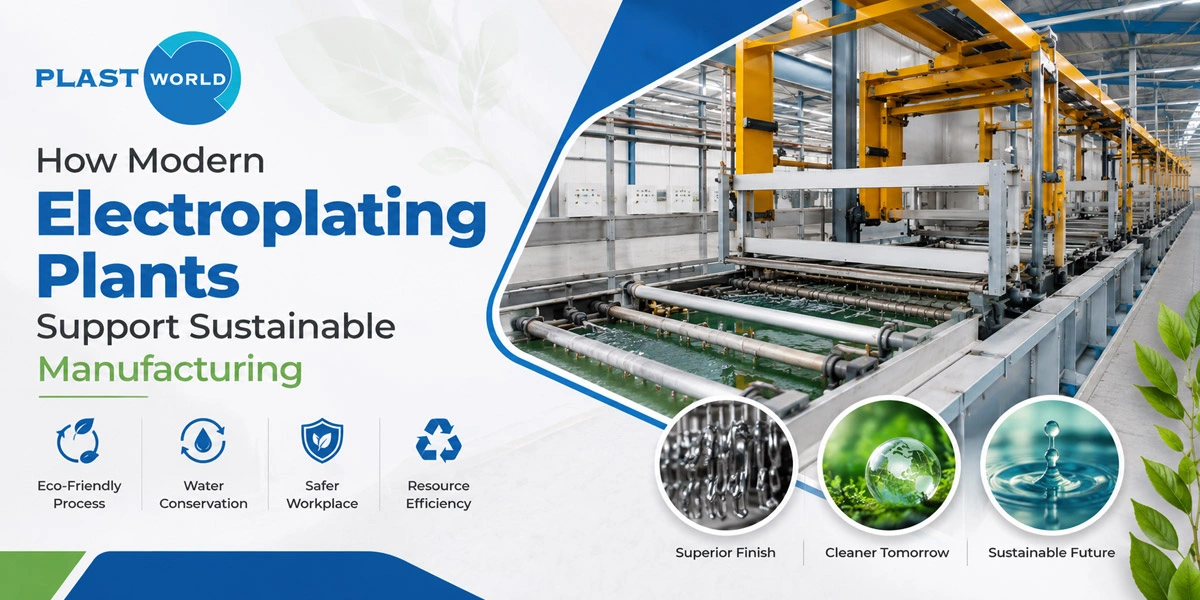
Acid fumes were once treated as just part of the job — something workers put up with. That's changed, and rightly so. A fume extraction system built specifically for acid environments pulls corrosive vapors away from the work floor before they can damage overhead structures, harm worker health, or drift outside the plant boundary. Environment-friendly fume extraction also protects steel cranes, roofing, and structural elements from the slow corrosion that untreated fumes cause over years. It's one of those upgrades that pays for itself quietly, without anyone noticing until the old rusted rafters are gone.
Before a component ever reaches the plating bath, it passes through degreasing, pickling, and passivation stages. Get this pretreatment wrong, and no amount of plating skill downstream fixes it. Tanks built from polypropylene copolymer, designed to withstand hydrochloric and nitric-hydrofluoric acid media, hold up to this kind of repeated chemical exposure far longer than makeshift alternatives. Solid welding — the hot gas extrusion type, done properly — means leak-proof tanks that don't quietly seep acid into the floor over months of use.
A genuinely sustainable electroplating setup isn't only about emissions. It's also about how long the equipment itself lasts before it needs replacing. Corrosion-free passivation tanks and properly designed treatment tanks mean fewer replacement cycles, less scrap metal, and fewer resources consumed rebuilding infrastructure that should have lasted longer in the first place. Plants that invest here upfront tend to spend far less on downtime and emergency repairs later.
Not every tank or fume system is built to the same standard, and this is where the choice of supplier stops being a minor detail. An experienced electroplating plant manufacturer in India understands local climate conditions, the specific acid concentrations used in Indian plating operations, and how to design tanks that survive rough day-to-day handling on an active shop floor — not just lab conditions. That local know-how, built over years of working with strip, wire, pipe, and structural steel treatment lines, tends to make the real difference between equipment that lasts and equipment that needs constant patching.
Sustainable manufacturing in electroplating isn't a future goal anymore — plants that take fume control, pretreatment quality, and tank durability seriously are already operating this way today. Plast World has been designing pickling tanks, treatment tanks, and acid fume extraction systems for plating and galvanizing operations since 2004, built specifically for the demands of Indian industrial environments. If you're evaluating an electroplating plant manufacturer in India for a new or upgraded line, you can explore the full product range at picklingtank.com.
Acid fumes corrode structural steel, roofing, and cranes over time while also posing health risks to workers, so a properly designed extraction system protects both the building and the people working in it.
If degreasing, pickling, and passivation aren't done properly, the plating itself won't adhere or perform correctly no matter how advanced the plating process is downstream.
Experience with local acid concentrations, climate conditions, and rough shop-floor handling matters — tanks built with proper welding and chemical-resistant materials tend to last far longer than generic alternatives.

Plast World
Plot NO. 07, Dev Estate,
Nr. National Rifle, Opp. Power House,
Ramol Cross Road, Vatva,
Ahmedabad- 382 445
Gujarat (india)
Powered by : #1 Vinayak InfoSoft - SEO Company Ahmedabad All Copyrights © . Plast World
